
The Great Disappointment: The Prophetic Anticipation and Unfulfilled Return of Christ
The Millerite Movement and the Quest for the Second Coming

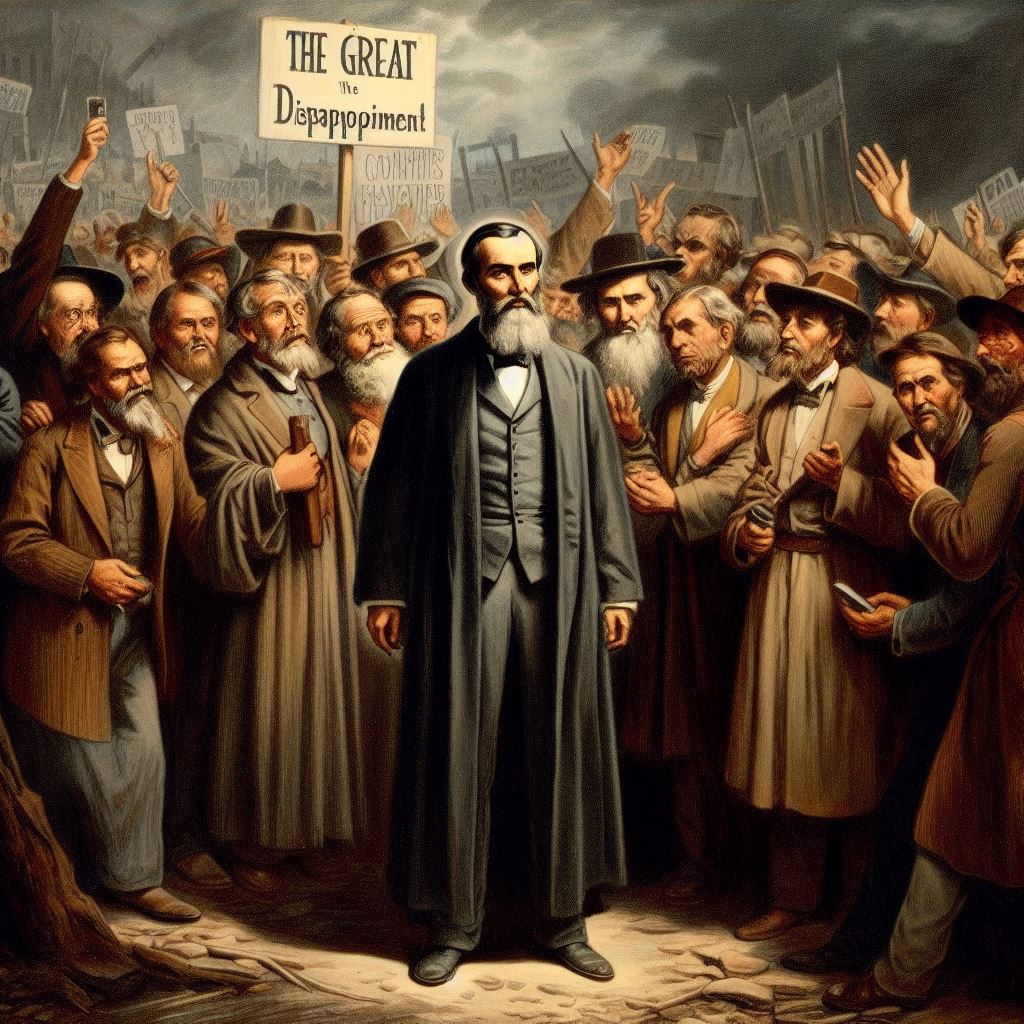
On October 22, 1844, a day that became known as "The Great Disappointment," followers of Baptist preacher William Miller gathered with eager anticipation for the long-foretold return of Christ, only to witness the profound disappointment of an unfulfilled prophecy. This event left an indelible mark on American religious history.
The Millerite Movement
The Millerite movement, led by William Miller, gained significant traction in the United States during the 1830s and 1840s. Miller's followers believed in the imminent return of Jesus Christ and the end of the world.
The Prophetic Calculation
William Miller's prophecy was based on a complex calculation that pointed to the return of Christ happening on a specific date in 1844. The anticipation and fervor among his followers were intense.
The Gathering at Miller's Farm
As the prophesied date, October 22, 1844, approached, thousands of Millerites gathered at Miller's farm and at various other locations, ready to witness the Second Coming.
The Great Disappointment
When the anticipated event did not occur as expected, the day became a profound disappointment. The sense of disillusionment and confusion among Miller's followers was palpable.
Reactions and Aftermath
In the aftermath of The Great Disappointment, Millerite leaders and followers grappled with the unfulfilled prophecy. Some sought new interpretations, while others left the movement.
Legacy
The Millerite movement had a lasting impact on American religious history. It led to the formation of various religious groups, such as the Advent Christian Church and the Seventh-day Adventist Church, both of which emerged from the Millerite roots.
Spiritual and Theological Evolution
The Great Disappointment prompted deep theological reflection and contributed to the development of distinct religious traditions that continue to thrive today.
The Great Disappointment of October 22, 1844, was a significant moment in the history of American religious movements. It served as a catalyst for the evolution of new religious communities and the enduring exploration of apocalyptic and prophetic beliefs. The Millerite movement's legacy endures as a testament to the human quest for spiritual truth and understanding.
🎂 Happy Birthday 🎂

Bruce Willis

Ebon Moss-Bachrach

Glenn Close

Caylee Cowan