
Defining Time and Space: The International Meridian Conference and the Establishment of Greenwich Mean Time
A Global Agreement that Shaped the World's Timekeeping
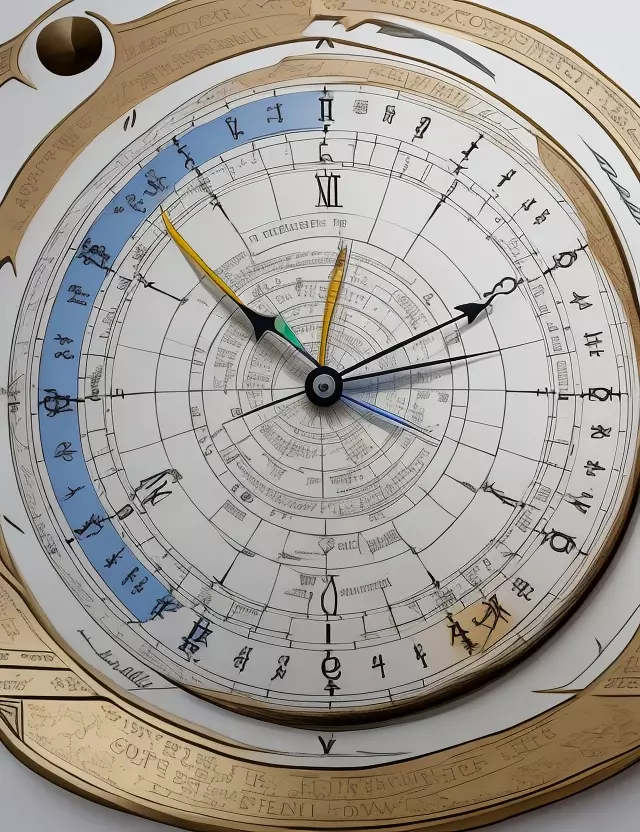
The International Meridian Conference, convened from October 1 to 22, 1884, in Washington, D.C., marked a pivotal moment in the history of timekeeping and global coordination. During this conference, representatives from around the world adopted the Greenwich Meridian as the prime meridian and established Greenwich Mean Time (GMT) as the universal standard for time measurement.
The Challenge of Standard Time
In the 19th century, various regions and countries had their own local time systems, which made coordinating schedules and transportation schedules a complex and often confusing task.
The Proposal of Sir Sandford Fleming
Sir Sandford Fleming, a Canadian railway planner and engineer, proposed the idea of dividing the world into 24 time zones, each one-hour apart, with a prime meridian at 0 degrees longitude to serve as a reference point.
The Greenwich Meridian
The Greenwich Meridian, running through the Royal Observatory in Greenwich, London, was chosen as the prime meridian at the conference. This decision was influenced by the observatory's long history of accurate timekeeping and the vast influence of the British Empire at the time.
Greenwich Mean Time (GMT)
GMT, also known as Universal Time (UT), was established as the baseline for time measurements. It became the reference point for all time zones, with time zones calculated based on their distance east or west from the Greenwich Meridian.
International Cooperation
The adoption of the Greenwich Meridian and GMT required international cooperation and diplomacy. Delegates from 25 nations, including the United States, France, Germany, and Russia, participated in the conference and reached a consensus.
Impact on Global Communication and Transportation
The standardization of time zones and the use of GMT had a profound impact on global communication, navigation, and transportation. It allowed for the development of accurate schedules for trains, ships, and later, aircraft.
Legacy
The decisions made at the International Meridian Conference in 1884 continue to shape our daily lives. Standard time zones and the use of GMT as a reference for timekeeping are integral to modern society.
The adoption of the Greenwich Meridian as the prime meridian and the establishment of Greenwich Mean Time at the International Meridian Conference were monumental steps in synchronizing timekeeping across the world. This historic agreement simplified global coordination and laid the foundation for our modern understanding of time and space.
🎂 Happy Birthday 🎂

Bruce Willis

Ebon Moss-Bachrach

Glenn Close

Caylee Cowan