
Into Uncharted Waters: Ferdinand Magellan Discovers the Strait of Magellan (October 20, 1520)
A Pioneering Maritime Exploration in Search of a Western Route to the Spice Islands
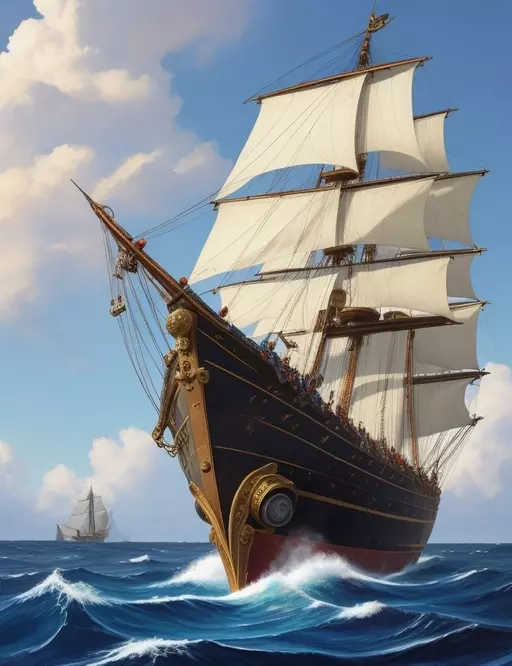
On October 20, 1520, Portuguese explorer Ferdinand Magellan and his fleet embarked on a groundbreaking voyage that would lead them to the discovery of a vital maritime passage. This strait, located at the southern tip of South America, came to be known as the Strait of Magellan. The expedition played a pivotal role in the age of exploration and the quest for a western route to the Spice Islands.
The Age of Exploration
The early 16th century was marked by a fervent search for new trade routes and passages to access the rich resources of the East Indies, particularly the Spice Islands (modern-day Indonesia). European powers were eager to find quicker routes that would bypass the arduous overland journeys and expensive intermediaries along the Silk Road.
Ferdinand Magellan's Ambitious Quest
Ferdinand Magellan, a Portuguese explorer sailing under the flag of Spain, believed he could find a western route to the Spice Islands. To accomplish this, he set sail with a fleet of five ships: the Trinidad, San Antonio, Concepción, Santiago, and Victoria.
The Discovery of the Strait
Magellan's fleet navigated through treacherous waters, braving extreme weather conditions and encountering indigenous peoples along the way. On October 20, 1520, they reached a narrow and winding passage connecting the Atlantic and Pacific Oceans. This strait, later named the Strait of Magellan in his honor, proved to be a crucial discovery.
Navigating the Strait
The expedition faced numerous challenges as they sailed through the strait. It took more than a month to traverse, and they endured storms and harsh conditions. The passage, however, opened a direct route to the Pacific Ocean, allowing them to reach the coveted Spice Islands by heading west.
The Legacy of the Strait of Magellan
The discovery of the Strait of Magellan was a significant achievement in the age of exploration. It provided an alternate route to the East Indies, bypassing the need to sail around the southern tip of Africa (the Cape of Good Hope). Although Magellan himself did not complete the entire voyage (he was killed in the Philippines in 1521), his expedition laid the groundwork for future circumnavigation of the globe.
Conclusion
The discovery of the Strait of Magellan on October 20, 1520, by Ferdinand Magellan and his fleet marked a momentous milestone in the age of exploration. This critical maritime passage allowed for easier access to the Spice Islands and opened new routes for global trade and exploration. The Strait of Magellan stands as a testament to human determination and the unrelenting quest to uncover the world's secrets.
🎂 Happy Birthday 🎂

Bruce Willis

Ebon Moss-Bachrach

Glenn Close

Caylee Cowan