
Masterstroke at Sea: Admiral Nelson's Victory at the Battle of Trafalgar
A Pivotal Naval Engagement in the Napoleonic Wars
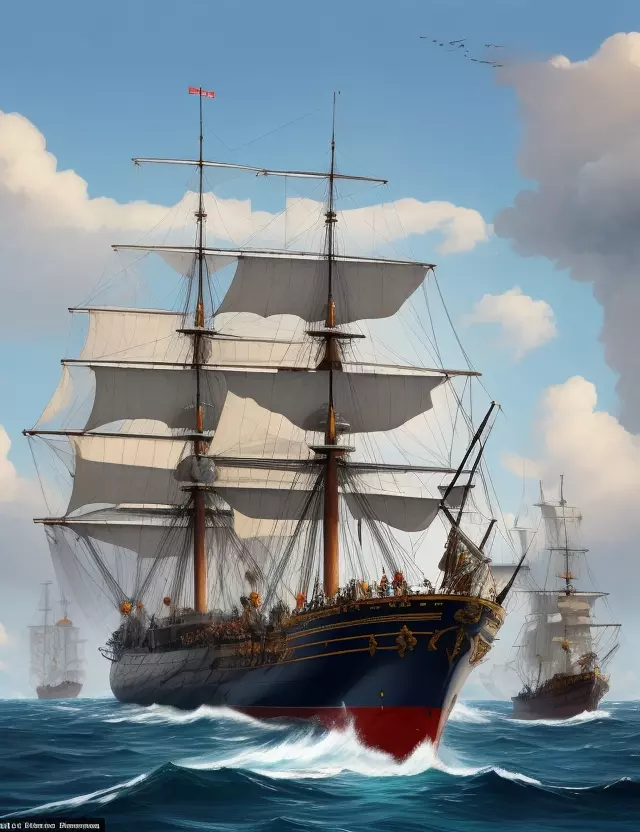
On October 21, 1805, one of the most decisive and celebrated naval battles in history unfolded off the coast of Spain – the Battle of Trafalgar. Led by the legendary British Admiral Horatio Nelson, the Royal Navy achieved a resounding victory over a combined French and Spanish fleet, altering the course of the Napoleonic Wars and ensuring British naval supremacy for decades to come.
The Napoleonic Wars
The Napoleonic Wars were a series of conflicts involving Napoleon Bonaparte's French Empire and various European coalitions. These wars engulfed Europe in a struggle for power, territory, and influence.
Naval Supremacy
Naval power was of paramount importance during this era, as control of the seas allowed for the movement of troops and resources, the protection of trade routes, and the isolation of enemy territories. Britain, as a maritime nation, relied heavily on its Royal Navy to safeguard its interests.
Admiral Horatio Nelson
Horatio Nelson was one of the Royal Navy's most exceptional and audacious commanders. He was known for his strategic brilliance and daring tactics, which earned him a reputation as one of Britain's greatest military heroes.
The Battle of Trafalgar
The Battle of Trafalgar was fought off the southwestern coast of Spain near Cape Trafalgar. The French and Spanish fleets, commanded by Admiral Pierre-Charles Villeneuve and Admiral Federico Gravina, sought to break the British blockade and combine their forces.
Nelson's Innovative Tactics
Nelson devised an innovative and daring strategy. He split his fleet into two columns and, instead of sailing parallel to the enemy, approached at a right angle, a tactic that would "cut the line" of the enemy ships, disrupting their formation.
"England Expects That Every Man Will Do His Duty"
Nelson's famous signal before the battle rallied his men. His fleet engaged the enemy in fierce combat, with the British sailors displaying unwavering determination and valor.
Decisive Victory
The battle was a resounding success for the Royal Navy. Nelson's tactics proved devastating, and the British captured or destroyed 22 of the enemy's 33 ships. Sadly, Nelson himself was mortally wounded in the battle.
Nelson's Legacy
The victory at Trafalgar secured British naval dominance, ensuring that Napoleon's plans for an invasion of Britain were thwarted. Nelson's legacy lived on, and he became a national hero.
The End of Napoleon's Naval Ambitions
Trafalgar marked a turning point in the Napoleonic Wars. With their naval supremacy intact, the British could enforce blockades and disrupt French trade, weakening Napoleon's continental blockade strategy.
Conclusion
The Battle of Trafalgar on October 21, 1805, remains a testament to the brilliance of Admiral Horatio Nelson and the valor of the Royal Navy. It was a pivotal moment in the Napoleonic Wars and a resounding victory that ensured British naval supremacy for generations. The battle's legacy endures as a symbol of the indomitable spirit of the Royal Navy and its vital role in shaping the course of history.
🎂 Happy Birthday 🎂

Bruce Willis

Ebon Moss-Bachrach

Glenn Close

Caylee Cowan