
A Brilliant Breakthrough: Thomas Edison's First Successful Test of the Electric Incandescent Lamp
Illuminating the Path to Modern Lighting
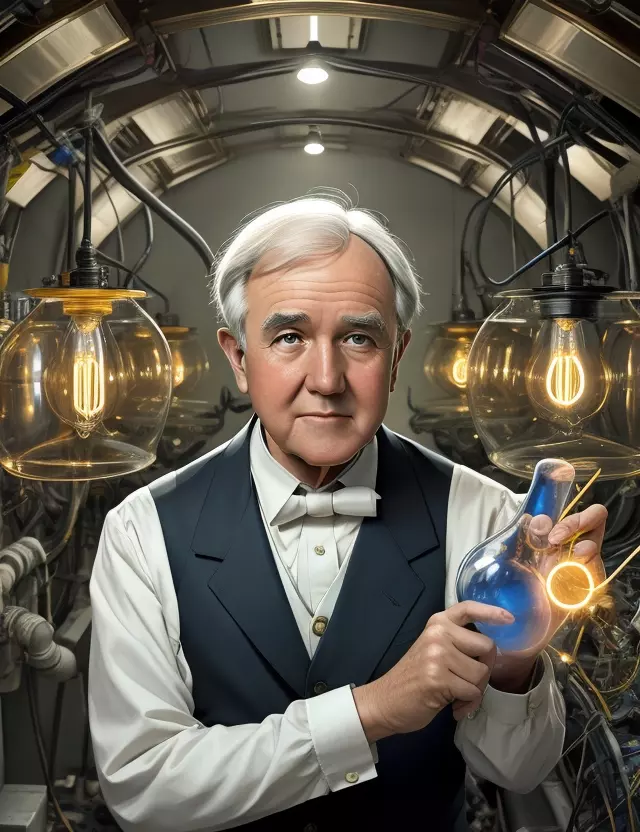
On October 21, 1879, in Menlo Park, New Jersey, Thomas Edison achieved a monumental milestone in the history of electrical engineering. He successfully tested the first practical electric incandescent lamp, a momentous invention that would revolutionize indoor and outdoor lighting, propelling society into the age of electricity.
Early Innovations in Lighting
Before Edison's groundbreaking work, lighting was primarily provided by gas lamps and candles. These sources were often expensive, dangerous, and produced inconsistent illumination. Edison aimed to develop a reliable, long-lasting, and energy-efficient lighting solution.
The Search for the Incandescent Lamp
Edison and his team tirelessly experimented with various materials and designs to create a practical incandescent lamp. Their pursuit led to the discovery that a carbonized bamboo filament could produce a stable, bright, and long-lasting light when heated by electricity.
The Eureka Moment
The moment of success came on October 21, 1879, when Edison successfully tested a prototype of the electric incandescent lamp. It glowed for over 13 hours, demonstrating the viability of this new form of illumination.
The Path to Practical Lighting
Edison's invention paved the way for the commercialization of incandescent lighting. His innovations in electrical generation and distribution, along with the creation of the first electric power station, further cemented the practicality of electric lighting.
Impact on Society
The incandescent lamp's introduction had a profound impact on society. It improved living conditions, enhanced safety, and allowed for extended productivity and leisure during the nighttime hours.
Legacy of Edison's Innovation
Edison's incandescent lamp was just one of many remarkable inventions. His contributions to the fields of electrical engineering, communications, and motion pictures continue to influence modern technology and everyday life.
Transition to New Lighting Technologies
While incandescent lamps served as the dominant lighting technology for over a century, they have been largely replaced by more energy-efficient alternatives, such as compact fluorescent lamps (CFLs) and light-emitting diodes (LEDs). However, Edison's innovation remains a symbol of human ingenuity and progress.
Conclusion
On October 21, 1879, Thomas Edison's successful test of the electric incandescent lamp marked a pivotal moment in history. His invention revolutionized the way we light our world, setting the stage for modern lighting technology. Edison's work exemplifies the power of innovation and its capacity to transform society by illuminating the path to a brighter and more efficient future.
🎂 Happy Birthday 🎂

Bruce Willis

Ebon Moss-Bachrach

Glenn Close

Caylee Cowan