
Galileo's Grand Finale: Deliberate Plunge into Jupiter Ends a Remarkable Mission
A Heroic End to a Pioneering Journey of Exploration
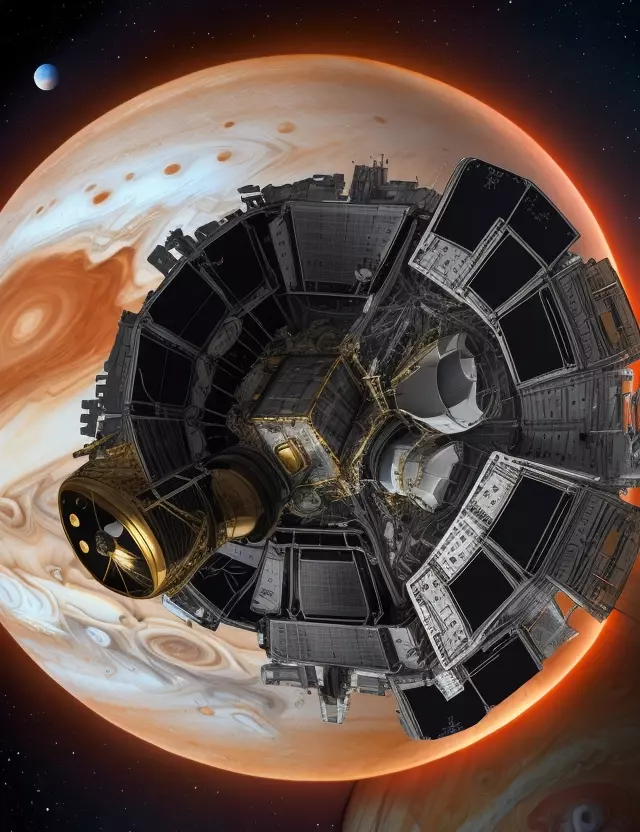
On October 21, 2003, the Galileo spacecraft, a venerable explorer of the solar system, concluded its extraordinary mission with a deliberate, fiery plunge into Jupiter's atmosphere. This final act of the Galileo mission was a testament to the remarkable achievements of a spacecraft that had enhanced our understanding of Jupiter and its moons.
The Galileo Mission
Launched by NASA in 1989, the Galileo spacecraft embarked on a six-year journey to study Jupiter, the largest planet in our solar system. It was named after the Italian astronomer Galileo Galilei, who made significant discoveries about Jupiter and its four largest moons.
Unlocking Jupiter's Mysteries
Galileo's scientific objectives included studying Jupiter's atmosphere, magnetosphere, and its intricate system of moons. The spacecraft carried a suite of instruments that allowed scientists to investigate the planet's composition, weather patterns, and magnetic field.
Exploring the Jovian Moons
One of Galileo's most significant achievements was its exploration of Jupiter's moon system. It provided close-up observations of the four largest moons, known as the Galilean moons: Io, Europa, Ganymede, and Callisto. These observations revealed the complex nature of these moons, including volcanic activity on Io and the potential for subsurface oceans on Europa.
Extended Mission and Challenges
Originally designed for a two-year mission, Galileo's journey was extended to nearly eight years. The spacecraft faced technical challenges, including the failure of its main antenna to fully unfurl, which limited its data transmission capability.
Galileo's Grand Finale
As the spacecraft's fuel supply dwindled, NASA engineers orchestrated a spectacular end to the mission. To avoid the risk of accidentally contaminating one of Jupiter's moons with Earthly microbes, Galileo was deliberately directed into Jupiter's atmosphere, where it burned up upon entry.
Scientific Insights and Legacy
The Galileo mission provided a wealth of data and scientific insights that have deepened our understanding of Jupiter and its moons. It has spurred ongoing research and laid the groundwork for future missions to the gas giant.
Conclusion
The final plunge of the Galileo spacecraft into Jupiter's atmosphere on October 21, 2003, marked the heroic conclusion of a pioneering mission of exploration. Galileo's legacy endures not only in the vast troves of scientific data it provided but also in the spirit of discovery and the continued quest to unlock the mysteries of our solar system.
🎂 Happy Birthday 🎂

Bruce Willis

Ebon Moss-Bachrach

Glenn Close

Caylee Cowan