
John Jay's Historic Appointment: First Chief Justice of the United States
October 20, 1720 - Closing the Chapter on the Golden Age of Piracy
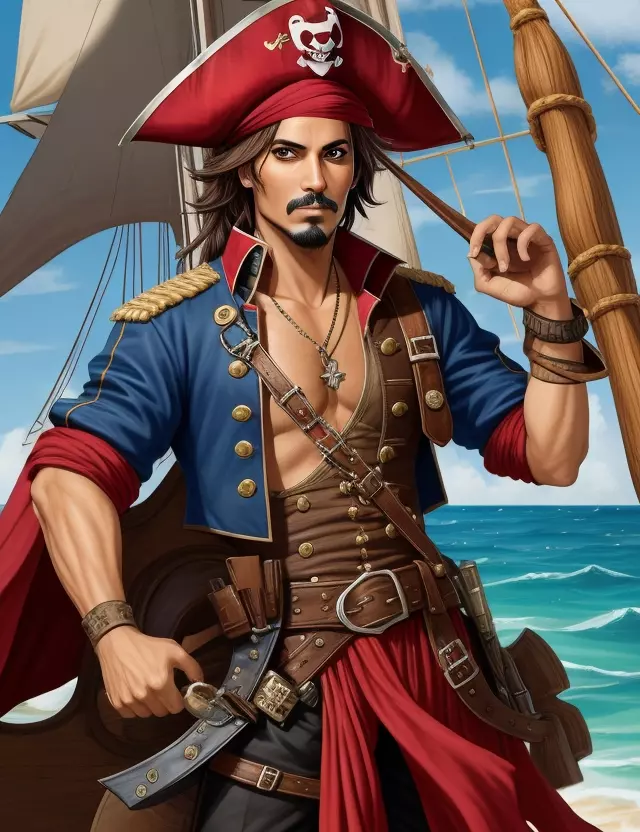
On October 20, 1720, the notorious Caribbean pirate known as "Calico Jack" met his end, bringing an era of high-seas piracy to a close. His capture and execution were emblematic of the efforts by colonial powers to suppress piracy in the Caribbean during the Golden Age of Piracy.
The Age of Piracy
The early 18th century was a tumultuous period in the Caribbean and Atlantic, often referred to as the "Golden Age of Piracy." Piracy thrived as pirates roamed the seas, plundering merchant vessels and creating legends around their names. Among the most notorious pirates of this era was John Rackham, better known as "Calico Jack."
Calico Jack's Pirate Career
Calico Jack was known for his flamboyant style, often dressing in colorful calico clothing. He sailed under a distinctive flag featuring a skull and crossed swords, which became a recognizable symbol of piracy. Calico Jack's crew included several famous pirates, including Anne Bonny and Mary Read, who disguised themselves as men while on board.
Capture and Trial
Calico Jack's pirate activities caught the attention of the authorities. In October 1720, a British naval sloop commanded by Captain Jonathan Barnet engaged Calico Jack's ship, the "William," off the coast of Jamaica. The ensuing battle ended with Calico Jack and his crew's capture.
Anne Bonny and Mary Read
Anne Bonny and Mary Read, two of Calico Jack's crew members, were also apprehended during the encounter. They had gained notoriety for their audacious and fierce fighting. Both women faced trial and were sentenced to hang, but their executions were delayed due to their pregnancies. Mary Read died in prison, while Anne Bonny's fate is less clear, as she seemingly disappeared from historical records.
Execution and Legacy
Calico Jack's fate was sealed. He was brought to trial and subsequently sentenced to hang. His execution took place in Port Royal, Jamaica, where he swung from the gallows. His demise marked a significant victory for the British authorities in their efforts to combat piracy in the Caribbean.
The End of an Era
The capture and execution of Calico Jack, along with the demise of other famous pirates, marked the end of the Golden Age of Piracy. The British Empire, in particular, was determined to suppress piracy in the Caribbean and the Atlantic, leading to the decline of these daring and ruthless seafaring criminals.
Conclusion
The execution of Calico Jack on October 20, 1720, was a symbolic end to an era of daring and dangerous piracy in the Caribbean. The legends of pirates like Calico Jack, Anne Bonny, and Mary Read continue to capture the imagination, but their stories also serve as reminders of the ruthlessness of the seas during the Golden Age of Piracy and the eventual triumph of colonial powers in curbing these criminal activities.
🎂 Happy Birthday 🎂

Bruce Willis

Ebon Moss-Bachrach

Glenn Close

Caylee Cowan