
Birth of Revolution: The Continental Association and the American Trade Boycott (October 20, 1774)
A Defining Step Toward Independence
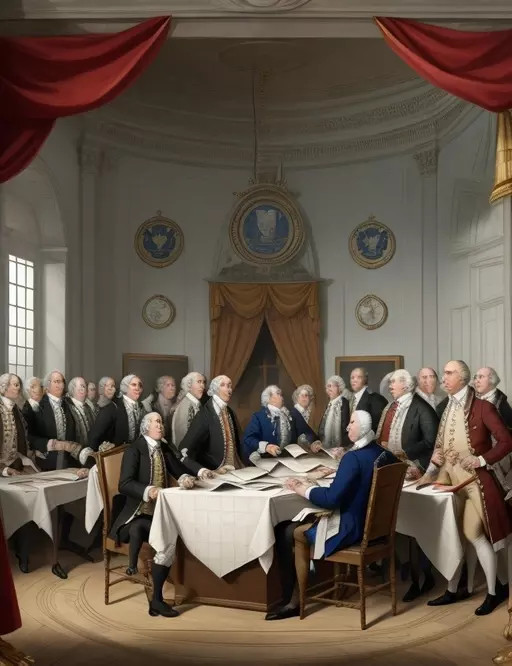
On October 20, 1774, in the midst of growing tension between the American colonies and Great Britain, the Continental Congress took a momentous step in the path to revolution. They created the Continental Association, a system designed to implement a trade boycott against British goods, marking a significant act of defiance and unity.
Precursors to the Continental Association
By 1774, colonial unrest had reached a breaking point. The Boston Tea Party in 1773 and the Coercive Acts (Intolerable Acts) imposed by Britain had intensified colonial grievances. In response, the First Continental Congress convened to address these issues.
The Continental Association's Purpose
The Continental Association aimed to unify the colonies and protest British policies by boycotting British goods. It was a direct response to the Coercive Acts, particularly the Boston Port Act, which had closed the port of Boston in retaliation for the Boston Tea Party.
Key Provisions
The Continental Association outlined specific agreements for the colonies. It called for the non-importation of British goods, including tea, textiles, and various other items. It also promoted non-consumption and non-exportation of British goods.
The Continental Association's Impact
The Continental Association had a significant impact on both sides of the Atlantic. It not only united the American colonies in a common cause but also put economic pressure on Great Britain, as American merchants stopped importing and trading British goods.
Expanding Revolutionary Sentiment
The Continental Association was a pivotal step toward revolution, as it signaled the colonies' increasing willingness to challenge British authority and the status quo. It was a precursor to more forceful measures and, ultimately, the Declaration of Independence in 1776.
The Path to Independence
The boycott imposed by the Continental Association laid the groundwork for broader resistance and eventually the American Revolutionary War. It was a critical phase in the journey towards American independence.
Conclusion
The creation of the Continental Association on October 20, 1774, was a turning point in the American colonies' struggle for independence. It represented a significant act of unity and defiance, as well as an early example of organized resistance to British rule. The Continental Association played a vital role in the larger narrative of the American Revolution, as the colonies moved closer to the ultimate goal of sovereignty.
🎂 Happy Birthday 🎂

Bruce Willis

Ebon Moss-Bachrach

Glenn Close

Caylee Cowan