
The Long March Begins: The Epic Journey of the Chinese Red Army (October 20, 1935)
A Revolutionary Odyssey and the Birth of Modern China
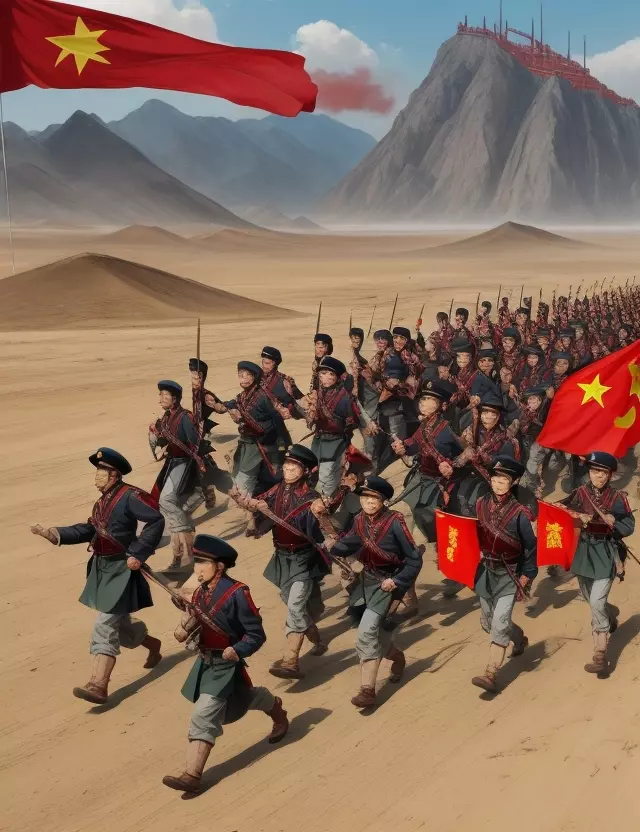
On October 20, 1935, a pivotal moment in Chinese history unfolded as the Red Army of the Chinese Communist Party commenced the legendary Long March. This monumental journey was a testament to the resilience and determination of the communist forces, ultimately shaping the course of modern China.
Background of the Long March
The Long March was a strategic retreat and military campaign undertaken by the Red Army in the midst of the Chinese Civil War. Facing encirclement and defeat by the Nationalist forces, the Communist leadership, including Mao Zedong, initiated the audacious plan to escape and regroup.
The Red Army's Objectives
The objectives of the Long March were multifaceted. The Red Army aimed to avoid destruction, find a secure base for regrouping, establish a new center of operations, and gain support from rural communities along the way. The journey covered vast and challenging terrain, including mountains, rivers, and inhospitable regions.
Challenges and Sacrifices
The Long March was fraught with challenges, including harsh weather, combat with Nationalist forces, and logistical difficulties. The Red Army's journey demanded enormous sacrifices, with many soldiers and civilians perishing due to these hardships.
Turning Points and Leadership
Mao Zedong's leadership during the Long March solidified his position within the Chinese Communist Party. His ideas and strategies, developed during this period, would later shape the policies and direction of the People's Republic of China.
A Symbol of Resilience and Endurance
The Long March became a symbol of the communist forces' resilience and determination. The epic journey, which covered approximately 6,000 miles (nearly 10,000 kilometers), forged a sense of unity and purpose among the Red Army and established a strong connection with rural communities.
The New Base and the Civil War's Continuation
The Long March eventually led the Red Army to northern Shaanxi, where they established a new base. From there, they continued their struggle against the Nationalist forces. This marked a turning point in the Chinese Civil War, which would culminate in the victory of the Communist forces in 1949.
Legacy and Historical Significance
The Long March remains a pivotal chapter in Chinese history, symbolizing the determination and sacrifice of the Communist forces. It is celebrated as a cornerstone event in the foundation of the People's Republic of China and is commemorated annually as a symbol of resilience and the forging of a new China.
Conclusion
The commencement of the Long March on October 20, 1935, was a momentous event in the history of China. This epic journey, with its numerous trials and tribulations, stands as a testament to the dedication and fortitude of the Red Army, setting the stage for the ultimate victory of the Chinese Communist Party and the birth of modern China.
🎂 Happy Birthday 🎂

Bruce Willis

Ebon Moss-Bachrach

Glenn Close

Caylee Cowan