
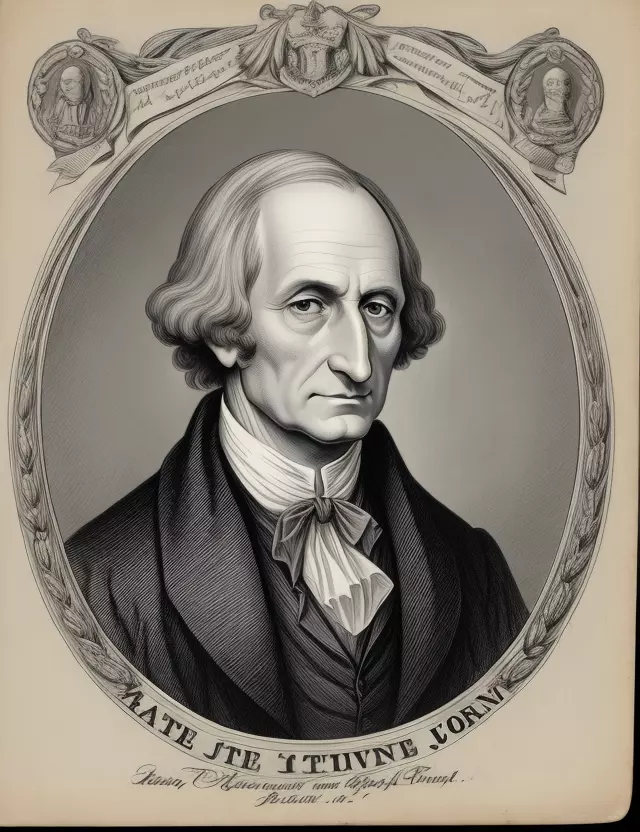
John Jay's Historic Appointment: First Chief Justice of the United States
On October 19, 1789, a historic moment in the establishment of the United States' judicial system occurred with the appointment of John Jay as the first Chief Justice of the United States. John Jay's appointment was a crucial step in shaping the nation's judiciary and solidifying the principles of the new American government.
Early Days of the United States
In the early years of the United States, following the ratification of the U.S. Constitution in 1787, the fledgling nation faced significant challenges in establishing its government. One of the key components of this newly formed government was the judiciary, which was outlined in Article III of the Constitution.
The Appointment of John Jay
John Jay, a prominent figure in the American Revolutionary era, was well-respected for his contributions to the nation. He had played a pivotal role in the development and ratification of the Constitution as one of the authors of the Federalist Papers. Given his experience, integrity, and commitment to the new nation, President George Washington nominated him to become the first Chief Justice of the United States.
The Senate's Confirmation
After his nomination, the United States Senate swiftly confirmed John Jay as the first Chief Justice. This marked an important step in the formation of the federal government, demonstrating a commitment to establishing a balanced and independent judiciary.
Jay's Role as Chief Justice
As the first Chief Justice, John Jay played a critical role in defining the judiciary's scope and powers. He presided over the U.S. Supreme Court, which initially consisted of just six justices, and he had a profound influence on the Court's early decisions and the development of American jurisprudence.
Jay's Landmark Decisions
During his tenure as Chief Justice, John Jay authored several landmark decisions, including Chisholm v. Georgia (1793), which established the principle that citizens could sue states in federal courts, and the famous Jay Treaty (1795), which settled several diplomatic issues between the United States and Great Britain.
Legacy of John Jay
John Jay's legacy extends beyond his role as the first Chief Justice. He also served as the nation's first Secretary of Foreign Affairs and was a diplomat involved in crucial negotiations. His contributions to the shaping of the United States' early government, foreign policy, and the judiciary remain a testament to his dedication to the nation.
Conclusion
The appointment of John Jay as the first Chief Justice of the United States on October 19, 1789, was a pivotal moment in the nation's history. It marked the establishment of a strong and independent judiciary, laying the foundation for the American legal system and demonstrating the commitment to the rule of law within the new republic. John Jay's leadership as Chief Justice and his contributions to the early years of the United States remain an integral part of the nation's history and the development of its institutions.
🎂 Happy Birthday 🎂

Bruce Willis

Ebon Moss-Bachrach

Glenn Close

Caylee Cowan