
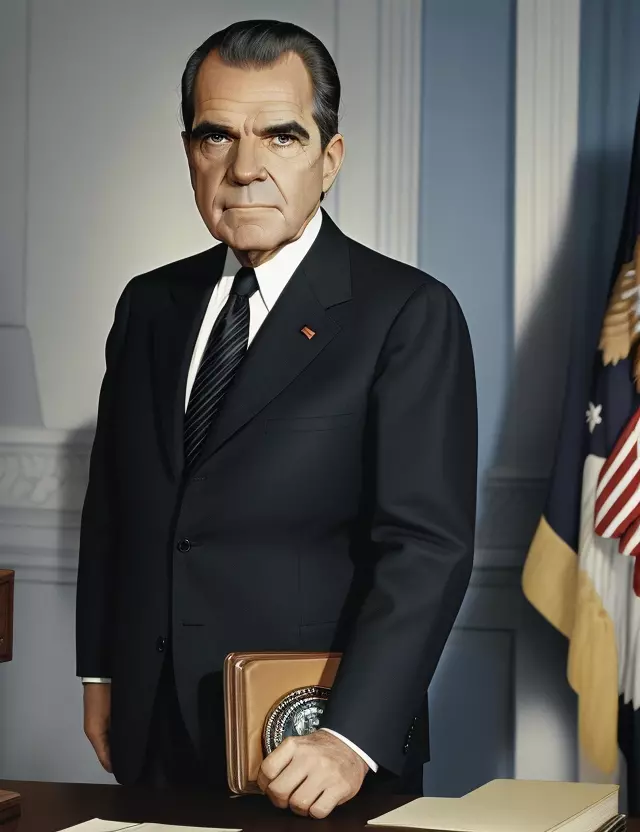
Nixon's Defiance: Rejecting the Release of Watergate Tapes
On October 19, 1973, President Richard Nixon took a defiant stance that would deepen the Watergate scandal and ultimately lead to his resignation. In a moment that would go down in history, Nixon rejected an Appeals Court decision ordering the release of the Watergate tapes, setting the stage for a constitutional crisis and a battle between the executive and judicial branches of the United States government.
The Watergate Scandal Unfolds
The Watergate scandal began in 1972 when five men were arrested for breaking into the Democratic National Committee headquarters at the Watergate complex in Washington, D.C. As investigations progressed, it became clear that the break-in was linked to the Nixon administration. The scandal's revelations would shake the very foundations of American democracy.
The Watergate Tapes
Crucial evidence in the investigation were the secret White House tapes, which recorded conversations between President Nixon and his advisers. These tapes were believed to hold the key to understanding the extent of Nixon's involvement in the cover-up of the Watergate break-in and other illicit activities.
The Appeals Court Decision
In October 1973, the legal battle over the tapes reached a pivotal point. The U.S. Court of Appeals, in the case United States v. Nixon, ordered President Nixon to release the tapes, citing the principle that no one, not even the President, was above the law. The decision represented a significant victory for transparency, the rule of law, and the checks and balances of the U.S. government.
Nixon's Defiance
President Nixon, however, had other plans. On October 19, 1973, he openly defied the court order, refusing to comply with the release of the Watergate tapes. He argued that the tapes were protected by executive privilege, and their release would be a breach of national security. This act of defiance further deepened the suspicions that the President was hiding damaging evidence.
Constitutional Crisis
Nixon's refusal to release the tapes led to a constitutional crisis, pitting the executive branch against the judiciary. The matter eventually made its way to the Supreme Court of the United States. In July 1974, the Supreme Court issued a unanimous decision in United States v. Nixon, rejecting the claim of absolute executive privilege and ordering the release of the tapes.
The End of Nixon's Presidency
The release of the Watergate tapes, including the infamous "smoking gun" tape, revealed that President Nixon had been involved in the cover-up of the Watergate break-in. Faced with certain impeachment by the House of Representatives and possible conviction by the Senate, Richard Nixon resigned as President of the United States on August 8, 1974, becoming the first and only U.S. president to resign from office. He was succeeded by Vice President Gerald Ford.
Conclusion
The events of October 19, 1973, when President Nixon rejected an Appeals Court decision ordering the release of the Watergate tapes, were pivotal in the Watergate scandal. Nixon's defiance led to a constitutional crisis, but the eventual release of the tapes played a decisive role in exposing the truth and ultimately led to his resignation from the highest office in the land. This moment in history serves as a powerful reminder of the importance of upholding the principles of transparency, accountability, and the rule of law in a democracy.
🎂 Happy Birthday 🎂

Bruce Willis

Ebon Moss-Bachrach

Glenn Close

Caylee Cowan