
The Rome-Berlin Axis: Forging the Axis Powers
Adolf Hitler and Benito Mussolini's Fateful Alliance
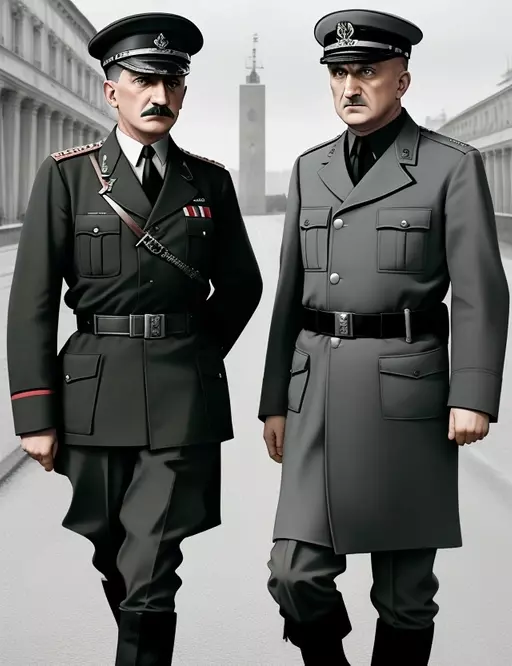
In 1936, Adolf Hitler and Benito Mussolini came together to establish the Rome-Berlin Axis, a momentous diplomatic move that laid the foundation for the Axis Powers and profoundly impacted the course of history.
The Axis Powers
The Rome-Berlin Axis would serve as a cornerstone for the broader Axis Powers, with Japan later joining this alliance.
Hitler and Mussolini
Adolf Hitler, the leader of Nazi Germany, and Benito Mussolini, the Prime Minister of Italy, were instrumental in shaping this alliance.
Common Interests
Both leaders saw mutual benefits in aligning their interests and ideologies, primarily focused on territorial expansion and challenging the status quo.
Challenging the Balance of Power
The Rome-Berlin Axis posed a significant challenge to the existing international balance of power, particularly in Europe.
Consequences
This alliance set the stage for further Axis cooperation, including the signing of the Anti-Comintern Pact and the Tripartite Pact, which would ultimately lead to World War II.
World War II and Beyond
The Axis Powers' actions and aggression in the years following the formation of the Rome-Berlin Axis would thrust the world into one of the most devastating conflicts in history.
Legacy
The Rome-Berlin Axis remains a symbol of the dangers of unchecked aggression and the critical importance of diplomacy in international relations.
The establishment of the Rome-Berlin Axis in 1936 by Adolf Hitler and Benito Mussolini marked a pivotal moment in history. This alliance, and the subsequent actions of the Axis Powers, would have profound and far-reaching consequences, ultimately shaping the course of World War II and its aftermath.
🎂 Happy Birthday 🎂

Lilli Kay

Lily Collins

Brad Dourif

Danneel Ackles