
Jamestown Massacre: 1622 Indian Massacre in Virginia
Powhatan Native Americans' Attack on English Settlers
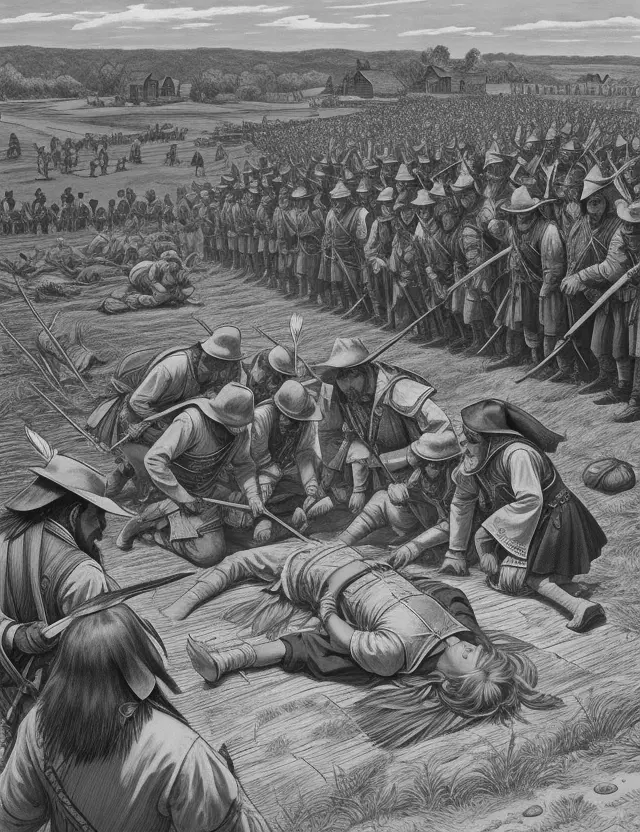
Jamestown Massacre: 1622 Indian Massacre in Virginia
On March 22, 1622, Powhatan Native Americans launched a devastating attack on the English settlement of Jamestown in Virginia. This event, known as the Jamestown Massacre or the 1622 Indian Massacre, resulted in the deaths of 347 English settlers, marking one of the deadliest conflicts in the early history of colonial America.
Background
The Jamestown settlement, established in 1607, was the first permanent English colony in North America. Relations between the English settlers and the Powhatan Confederacy, led by Chief Powhatan, were often tense. Despite sporadic conflicts and uneasy alliances, the colonists and the Powhatan people coexisted, albeit with significant cultural and territorial tensions.
The Attack
On March 22, 1622, the Powhatan Indians launched a coordinated surprise attack on the English settlements along the James River. The attack was meticulously planned, with Powhatan warriors striking multiple English outposts simultaneously. The unsuspecting settlers were caught off guard, leading to widespread devastation.
Aftermath
The Jamestown Massacre of 1622 resulted in the deaths of hundreds of English settlers and caused widespread fear and outrage throughout the colony. In retaliation, the English launched military campaigns against the Powhatan Confederacy, escalating hostilities in the region. The massacre also intensified the colonization efforts in Virginia, leading to further displacement and marginalization of Native American communities.
Despite the violence and loss of life, Jamestown persevered and continued to grow, eventually becoming the capital of the Virginia Colony. However, the events of March 22, 1622, left a lasting impact on the relationship between the English settlers and the indigenous peoples of the region, shaping the course of colonial history in America.
🎂 Happy Birthday 🎂

Emily Osment

Olivia Wilde

Paget Brewster

Sharon Stone