
The Alaska Purchase: America's Acquisition of a Northern Frontier
From Russian Territory to American Possession
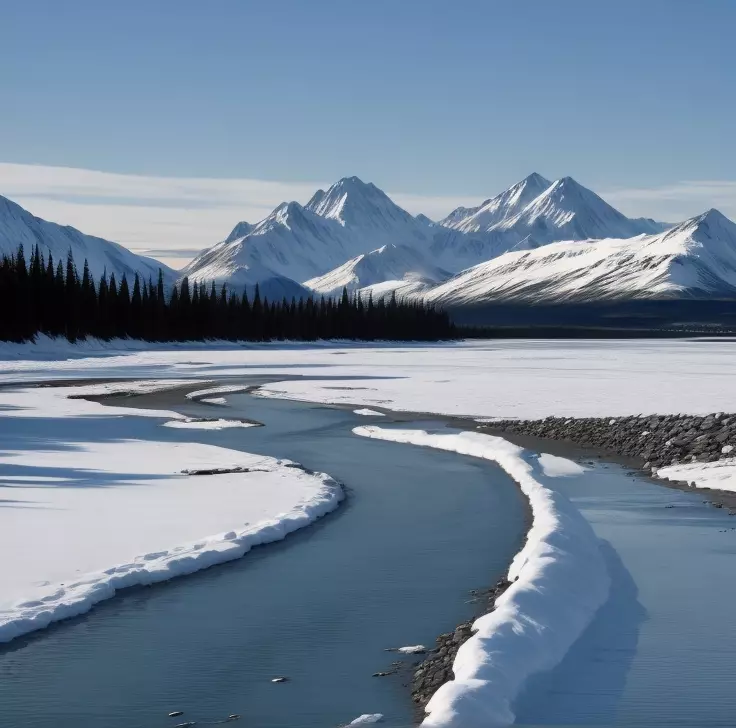
On October 24, 1868, the United States officially took possession of Alaska, a vast and rugged territory that would become a unique and valuable addition to the nation. This event marked the conclusion of the Alaska Purchase, in which the United States acquired the land from Russia.
Russian Exploration and Settlement
Alaska's history is deeply intertwined with Russian exploration and colonization. Russian explorers, fur traders, and settlers had established a presence in the region since the 18th century.
An Opportunity for Expansion
In the mid-19th century, Russia faced financial challenges, and the remote and largely uninhabited Alaska was seen as an opportunity to alleviate these difficulties.
Secretary of State William Seward
The negotiations for the purchase of Alaska were conducted by U.S. Secretary of State William H. Seward. He believed that acquiring Alaska was strategically important and could provide valuable resources.
The Alaska Purchase
On March 30, 1867, the United States and Russia signed the Treaty of Cession, in which Russia agreed to sell Alaska to the United States for $7.2 million. The purchase was met with mixed reactions in the U.S., with some dubbing it "Seward's Folly."
Alaska's Resources
The acquisition of Alaska was based on the belief that the territory held significant natural resources, including fur, timber, minerals, and fisheries.
Gold Rushes and Economic Development
The late 19th century and early 20th century saw the discovery of gold and other valuable resources in Alaska, leading to economic development and population growth.
Statehood and Cultural Significance
Alaska became the 49th state of the United States on January 3, 1959. It is a region of great cultural diversity, with Indigenous peoples, Russian influences, and a distinct frontier spirit.
Modern Significance
Today, Alaska is known for its stunning natural beauty, abundant wildlife, and unique cultural heritage. It also plays a strategic role in U.S. defense and global geopolitics.
The United States' acquisition of Alaska on October 24, 1868, marked the beginning of a new chapter in the history of this vast and remarkable territory. From the Klondike Gold Rush to the stunning landscapes of Denali National Park, Alaska's story is one of resilience, resourcefulness, and natural wonder, making it an integral part of the American experience.
🎂 Happy Birthday 🎂

Lilli Kay

Lily Collins

Brad Dourif

Danneel Ackles