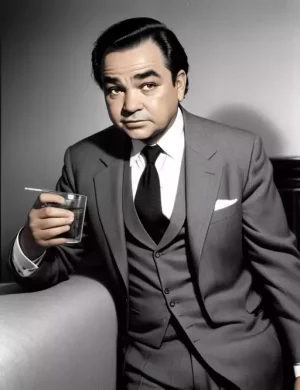
Edward G. Robinson
Introduction to Edward G. Robinson
Edward G. Robinson, born Emanuel Goldenberg on December 12, 1893, in Bucharest, Romania, emerged as one of the most iconic actors of Hollywood's Golden Era. His remarkable career spanned several decades, leaving an indelible mark on the film industry and earning him a place among the legendary figures of American cinema.
Early Life and Immigration to the United States
Robinson's family immigrated to the United States when he was a child, and he grew up in New York City. Despite facing economic challenges, Robinson's passion for acting led him to pursue a career in the theater. His early experiences on stage set the stage for a remarkable journey in the world of entertainment.
Rise to Prominence in Film
Edward G. Robinson's breakthrough in film came in the early 1930s with memorable roles in movies like 'Little Caesar' (1931), where he portrayed the ruthless gangster Rico Bandello. This role not only established Robinson as a formidable actor but also defined the gangster archetype in cinema, contributing to the success of the emerging crime film genre.
Iconic Performances
Robinson's versatility as an actor allowed him to excel in a range of roles beyond the gangster persona. His performances in films like 'Double Indemnity' (1944) and 'Key Largo' (1948) showcased his ability to portray complex characters with depth and nuance. Whether playing villains or sympathetic protagonists, Robinson's on-screen presence was always compelling.
Contribution to Hollywood's Golden Era
Edward G. Robinson's impact on Hollywood's Golden Era extends beyond his individual performances. He was a key figure in shaping the cinematic landscape of the time, contributing to the success of numerous films that are now considered classics. His influence resonated not only with audiences but also with fellow actors and filmmakers.
Recognition and Awards
Throughout his career, Robinson received acclaim for his contributions to the film industry. While he didn't win an Academy Award for his performances, he was later honored with an honorary Oscar in 1973 for his outstanding achievements in the motion picture industry. The award recognized the enduring legacy of a performer whose work stood the test of time.
Legacy and Cultural Impact
Edward G. Robinson's legacy endures as a testament to his unparalleled talent and contributions to the world of cinema. Beyond his on-screen achievements, he was also known for his advocacy and philanthropy. Robinson's impact on the cultural landscape of Hollywood remains immeasurable, with his name forever etched in the annals of film history.
Edward G. Robinson's journey from an immigrant child in New York to a Hollywood legend is a story of resilience, passion, and artistic brilliance. As we reflect on his life and career, we celebrate the enduring legacy of a man who not only defined an era of filmmaking but left an indelible mark on the hearts of moviegoers around the world.